How Rolled Oats Are Made and Why Their Flakes Differ
How rolled oats are made explains why flakes differ in texture and cooking behavior, helping you choose the right oat form for porridge, baking, or toppings.
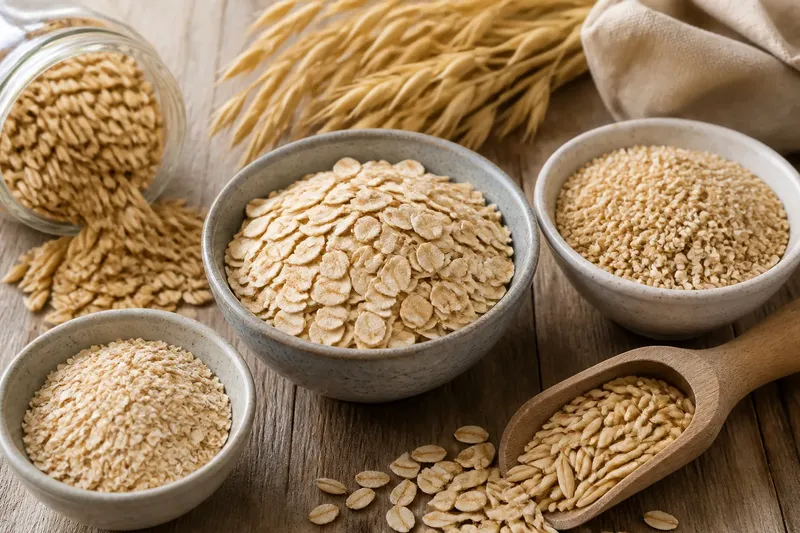
Why do some rolled oats hold their shape in a bowl while others soften quickly? How rolled oats are made offers a useful clue: the oat groat is cleaned, conditioned with heat and moisture, then flattened into flakes. The details vary by product, so the package directions still matter.
Whole groats provide the starting point
Oats grow inside a tough outer hull. After harvest, processors remove that inedible covering to reveal the groat, the whole oat kernel, which includes bran, germ, and starchy interior.
Removing the hull is different from refining a grain. Rolled oats are generally made from whole groats, but the process can vary by producer. The ingredient list tells you what the product contains; words such as rolled, quick, or steel-cut describe its form.
Processors also clean and sort groats to remove field material and other unwanted pieces. This prepares the grain for further handling; it does not mean extra ingredients have been added.
Heat conditions groats for further processing
Groats are often heated before they are cut or rolled. Heat and moisture can condition the kernels and affect their handling, flavor, and storage characteristics. The equipment and sequence depend on the producer.
Conditioning can make groats easier to cut or flatten without producing as many broken fragments. This is one stage in a process, not a single transformation shared in precisely the same way by every oat product.
Heat treatment does not mean every package is ready to eat as sold. Some oats need simmering, others brief heating or soaking; follow the product's own directions.
Steel-cut oats are cut pieces, not rolled-oat flakes
Steel-cut oats are groats cut into smaller pieces, commonly with steel blades. They are not simply an intermediate stage that must be rolled to make rolled oats. Some rolled-oat processes may involve cutting groats before flattening, but that does not make steel-cut oats the standard starting material for rolled oats.
For rolled oats, whole groats are commonly flattened between rollers; the exact sequence varies among producers and products. Cutting and rolling are distinct operations: cutting divides a groat, while rolling presses it into a flake.
In a package or bowl, broad flakes look different from small cut pieces. That visual clue can help you anticipate texture, but the cooking directions are the clearest guide to how the maker intends the product to be prepared.
Rollers flatten groats into flakes
During rolling, groats pass between rollers that press them into flattened pieces. The resulting flake has more surface exposed than a rounded kernel, but it remains oat: the process changes the shape, not the grain's identity.
Roller settings and the size and condition of the incoming groats influence the finished flakes. Thicker flakes often retain a more distinct shape after cooking, while thinner ones tend to soften sooner. Liquid, cooking time, stirring, and the rest of the recipe also affect texture.
Say you are making baked oatmeal and want recognizable flakes in the finished dish. You have a recipe calling for old-fashioned rolled oats, so you choose a package labeled that way and follow its directions; the likely result is a more apparent oat texture than if you used finer, thinner quick oats. The choice fits the intended texture, not a universal ranking of oats.
Oat names describe different shapes and uses
Product names commonly distinguish steel-cut, rolled, quick, and instant oats. They signal differences in physical form and preparation, though exact details vary by maker. Instant oats may be thin flakes or smaller pieces, and flavored packets can contain added ingredients.
- Steel-cut oats: groats cut into pieces rather than flattened into flakes. Their pieces generally remain distinct during cooking.
- Old-fashioned rolled oats: typically broad flakes made by rolling groats. They are used in porridge, baking, and granola.
- Quick oats: usually smaller or thinner pieces that soften readily. Check the package directions because the name does not specify one exact preparation.
- Instant oats: designed for rapid preparation and sold plain or with flavorings and other ingredients. Read the ingredient list to see which additions are present.
These names are useful descriptions of form, not a universal quality scale. Thinner flakes can suit a softer porridge or a quick batter; thicker flakes may be preferable when a recipe calls for oats that remain more visible.
Processing affects how oats behave in recipes
Flattening exposes more of each oat to liquid than an intact groat does. Cutting creates smaller pieces that soften differently from whole flakes. Size, thickness, heat treatment, and cooking time all contribute to how oats absorb liquid and retain their shape.
That is why swapping one form for another can change a recipe even when both products contain oats. Cookies made with thick flakes may have a different chew from those made with quick oats; steel-cut porridge generally calls for a different cooking approach than porridge made with thin flakes. If you substitute, expect a texture change and use directions suited to the oats you have.
As flakes take up liquid, they soften and may release some starch into the surrounding mixture. How much they break down depends on the product and how it is prepared.
Package details answer different questions
Plain rolled oats may list only oats as an ingredient. Flavored packets can include sweeteners, salt, dried fruit, spices, or other additions. Those ingredients are separate from the processing that shapes a groat into a flake.
A front-of-package word such as “quick” describes a form or preparation style; it does not tell you by itself whether sugar or flavorings have been added. Read the ingredient list if you want to know what is in the product.
Claims about organic sourcing, gluten-free status, or manufacturing facilities concern sourcing, handling, or labeling rather than the mechanics of rolling. If a dietary need or allergy makes a claim important, follow the package details and consult a qualified professional when individual guidance matters.
What do people ask about rolled oats?
Are rolled oats cooked before they are packaged?
Oats commonly receive heat treatment during processing, but that does not mean the finished product is ready to eat as sold. Follow the package directions for cooking or soaking.
Are rolled oats and old-fashioned oats the same?
Old-fashioned oats are a familiar type of rolled oats, usually sold as broader flakes. Naming and flake details can vary, so check the product description when the distinction matters for your recipe.
Can quick oats replace rolled oats in baking?
They can work in some recipes, but smaller or thinner pieces may make the result softer and less visibly flaky. If the recipe depends on chew or distinct flakes, use the form it calls for or expect a different texture.
Are steel-cut oats less processed than rolled oats?
Both are processed: steel-cut oats are divided into pieces, while rolled oats are flattened, and either may receive heat treatment. Their useful distinction is shape and cooking behavior, not a simple ranking from less to more processed.
Match the oat form to the dish
When comparing packages, start with the product form and cooking directions. Broad flakes, thinner flakes, and cut pieces offer different balances of tenderness and visible grain; choose the one that fits the texture you want in porridge, baking, or a topping.
How rolled oats are made explains why those forms behave differently: cleaning prepares groats, heat conditions them, and rollers flatten them, while cutting is a separate operation that may appear in some processing sequences. Keep that distinction in mind when a recipe names a particular oat, and use the package directions to guide preparation.